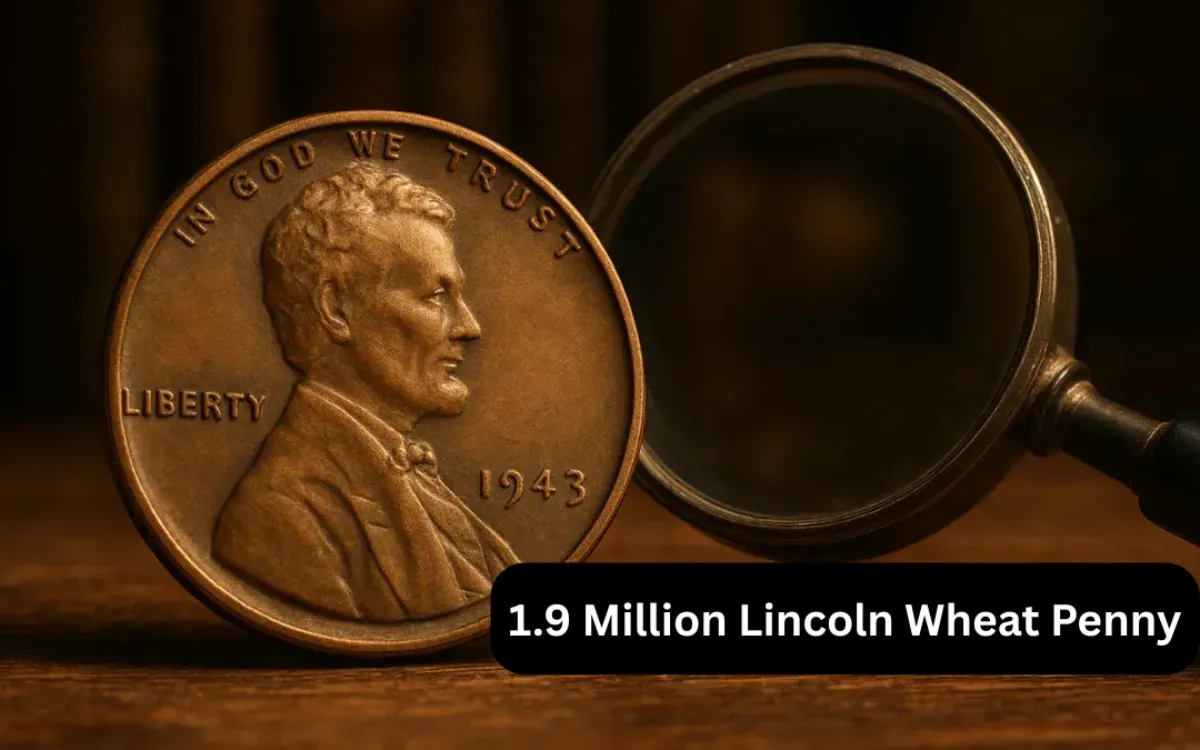
The world of coin collecting is renowned for its ability to blend history, art, and curiosity into a rewarding hobby. Among the myriad coins that have circulated through time, few ignite as much excitement as the Lincoln Wheat Penny. Within this iconic collection lies the legendary pursuit of the 1.9 million Lincoln Wheat Pennies, a treasure hunt steeped in rarity and discovery. This intriguing narrative captivates collectors, drawing them into a world filled with perseverance and fascination.

A Coin with Humble Beginnings
The Lincoln Wheat Penny is deceptively ordinary at first glance, yet it encapsulates a rich and compelling story. Launched in 1909 to commemorate the 100th anniversary of President Abraham Lincoln’s birth, it became notable as the first U.S. circulating coin to feature a real historical figure. Designed by Victor David Brenner, the front depicts Lincoln’s profile while the back showcases two wheat stalks, emblematic of prosperity and growth—key elements of the American journey.
These pennies were minted in vast quantities, circulating through grocery stores and homes alike. However, particular years and mint marks garnered scarcity due to various factors like reduced production and wartime efforts, making the elusive 1.9 million-coin run a central focal point for collectors globally.
The Allure of Rarity
Rarity is the lifeblood of coin collecting. As a limited quantity of a specific coin survives, its value escalates both financially and emotionally. The 1.9 million Lincoln Wheat Pennies have achieved an almost mythical standing within the numismatic community.
These coins emerged in notably smaller quantities compared to other Lincoln Wheat Pennies. While certain years saw minting in the hundreds of millions, the year associated with this particular run produced a dramatically reduced output. Who could have predicted that decades later, collectors would sift through change jars and old coin albums seeking this small copper treasure?
The Coin That Sparked a Movement
Initially, the 1.9 million Lincoln Wheat Penny was just another coin passing through the economy. However, the growing interest in numismatics led collectors to realize how few of these coins remained. Some coins had vanished forever, while others were too worn to be recognized. Only a fraction was preserved through careful collection.
As news spread, a global treasure hunt materialized. Enthusiasts began to scrutinize every cent with renewed rigor. Coin shows buzzed with discussions of newfound treasures, and auction houses witnessed a gradual rise in prices. The humble penny transformed into a symbol of opportunity, luck, and adventure.
History Hidden in Copper
What enchants collectors about these coins is the history they embody. Picture a Lincoln Wheat Penny minted nearly a century ago: perhaps it was exchanged for a loaf of bread during the Great Depression or circulated among farmers. This coin might have traversed the country or rested for years in an attic, awaiting rediscovery.
Holding such a coin feels akin to possessing a time capsule. Beyond monetary worth, its emotional significance prevails. Each scratch, faded color, and worn edge narrates a distinct tale, making every coin a living artifact.
The Thrill of the Hunt
Year after year, enthusiasts search for these pennies, driven by the allure of possibilities. Many collectors derive immense joy not merely from possessing a rare coin but from the journey of unearthing it. The notion that valuable coins could lie hidden in an old jar or a neglected safe is exhilarating.
Often, discoveries spring from mundane circumstances. Whether it’s finding a pouch of old coins among inherited items or unknowingly pocketing a historical artifact, the stories of discovery fuel excitement among collectors across generations.
Condition Is Everything
While the rarity of the 1.9 million Lincoln Wheat Penny amplifies its desirability, its condition plays a critical role as well. Coins that are “uncirculated” or exhibit minimal wear can command significantly higher prices compared to their well-used counterparts. Thus, collectors take utmost care in handling these coins, ensuring they are stored in protective holders shielded from air, moisture, and skin oils that could inflict damage.
Professional grading agencies authenticate and evaluate coins, assigning standardized grades reflective of their condition. This certification not only ensures buyers of authenticity but also intensifies the coin’s market appeal. For many, receiving a high grade on a rare penny validates their efforts and commitment.
More Than Money: A Community of Passion
Beyond monetary values, there thrives a passionate and welcoming community of collectors. Coin collecting unites individuals from diverse backgrounds—students, historians, retirees—all sharing a common bond. Clubs, online forums, exhibitions, and auctions have become venues for exchanging stories and knowledge.
The quest for the 1.9 million Lincoln Wheat Penny has enriched this community spirit, inspiring research projects, articles, videos, and animated debates. For many, the coin serves as a gateway to deeper appreciation of history, craftsmanship, and the evolution of American currency.
The Modern-Day Treasure Hunt
In today’s increasingly digital landscape, the allure of the Wheat Penny continues to thrive. Metal-detecting enthusiasts search fields and past homes. Estate sales pique interest, and banks still receive requests for rolled coin boxes from hopeful seekers intent on striking gold.
Every fresh discovery contributes to the growing legend. Occasionally, a rare penny surfaces at an auction, igniting widespread enthusiasm. Others quietly enter private collections, cherished not solely for their value but for the narrative behind their discovery. This ongoing story is shaped by successive generations of collectors, each adding their voice to the unfolding tale.
Lessons from the Lincoln Wheat Penny
At its core, the narrative surrounding the 1.9 million Lincoln Wheat Penny extends beyond mere numismatic interest. It reminds us that extraordinary value can lie within the most unassuming items. A small copper coin that once purchased everyday necessities now stands as an emblem of history, patience, and perseverance.
It teaches us to scrutinize the world around us, to cherish the beauty of craftsmanship, and to recognize that even common objects can be treasured fragments of our heritage. Most significantly, it celebrates the timeless urge to search, discover, and preserve the past.
Conclusion
The pursuit of the 1.9 million Lincoln Wheat Penny is a journey that seldom concludes with a single find. Instead, it is maintained through shared excitement, research, storytelling, and a hopeful spirit that defines the coin-collecting community. As long as forgotten drawers, dusty attics, and jars filled with unexamined change exist, the dream of uncovering one of these rare pennies will persist.
Whether collectors ultimately grasp one of these pennies or not, the spirit of the search is invaluable. It connects individuals to history, each other, and a sense of wonder often overlooked in modern life. Hence, the legacy of the Lincoln Wheat Penny continues to shine—softly, like the enduring luster of copper through the passage of time.