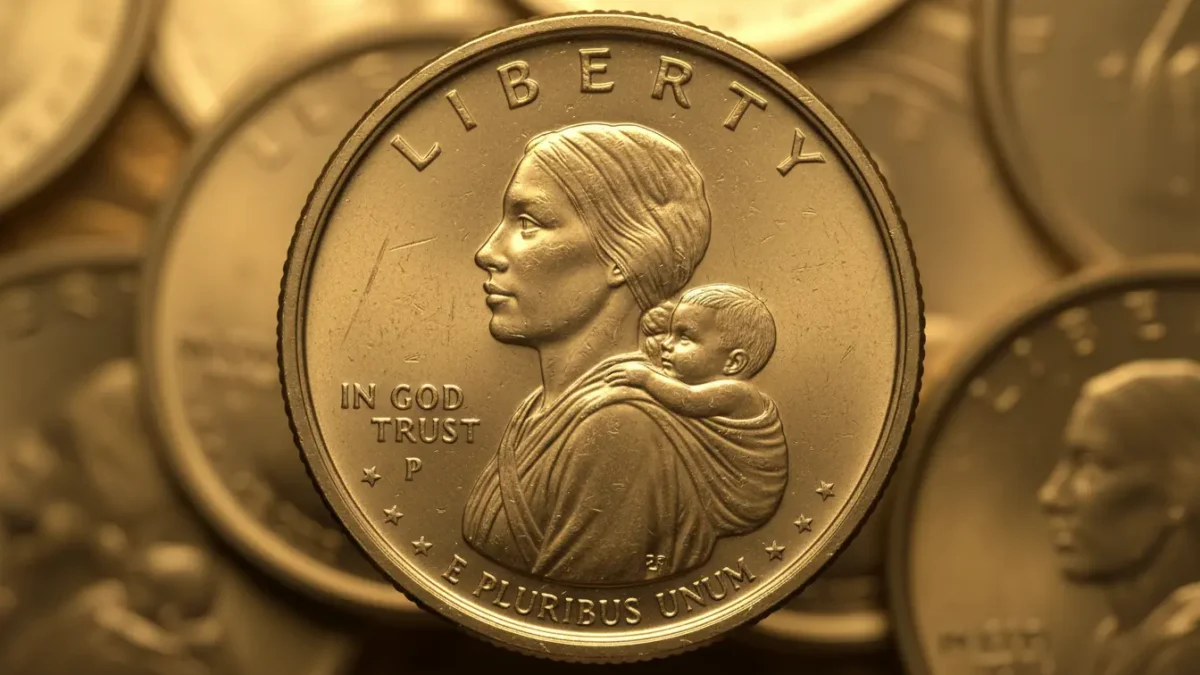
The idea that a Sacagawea dollar could be worth up to $2.1 million can sound surprising. In reality, only extremely rare varieties or major minting errors, authenticated and often graded at the highest levels, attract those kinds of offers from specialized collectors.

Why some rare Sacagawea dollars command huge prices
Collectors and investors pay top dollar for coins with true scarcity, documented provenance, and perfect condition. For Sacagawea dollars, that usually means an unusual die variety, a dramatic mint error, or a coin tied to a historically important release.
Professional grading by services such as PCGS or NGC is critical. The certificate and population report give buyers confidence and create market value far above normal circulation prices.
Common rare Sacagawea dollar types to look for
Not every unusual coin will be worth millions, but these categories include the pieces most likely to attract high premiums.
– Major mint errors (mules, doubled dies, off-center strikes).
– Unusual die varieties (repunched mint marks, large date vs. small date differences).
– Pattern coins or trial strikes produced in very limited numbers.
– Extremely high-grade examples of known scarce issues (MS/PR 68+ or higher).
Identify mint errors and varieties
Begin with clear magnified photos of both obverse and reverse. Use a loop or a 10x–20x magnifier to examine small details like mint marks and die lines.
Key target areas include the mint mark location, the date, fields near the rim, and the design elements such as Sacagawea’s profile and the eagle on reverses.
Step-by-step checklist to identify a potentially valuable Sacagawea dollar
1. Inspect the date and mint mark closely. Look for repunched or doubled mint marks (RPM) and mismatched fonts.
2. Look for die doubling on letters, numbers, or design elements—doubled dies can be very valuable when strong.
3. Check for minting errors: off-center strikes, clipped planchets, broadstrikes, or mismatched obverse/reverse (mules).
4. Examine the rim and edge. Missing or partial reeding and unusual edge marks are clues.
5. Compare to reference photos in the PCGS CoinFacts, NGC Varieties, and Krause catalogs.
6. Take high-resolution photographs and document any unusual features. Record weight and diameter to detect possible counterfeit planchets.
Tools that make identification easier
– 10x–20x jeweler’s loupe or headband magnifier
– Digital microscope with photo capture
– Accurate scale and calipers for weight and diameter
– Access to online variety databases and auction archives
Did You Know?
The Sacagawea dollar was first issued in 2000 and was designed by sculptor Glenna Goodacre. Its golden color comes from a manganese-brass cladding, not from precious metals.
Authentication and grading: the decisive step
If you think you have a rare Sacagawea dollar, the next step is professional authentication. Submit the coin to a top grading service (PCGS or NGC) for examination and grading.
Grading provides a condition score and often flags known varieties or errors. A certified coin with a high grade and clear rarity can be consigned to major auction houses, where specialist collectors bid aggressively.
What graders look for
– Original surface quality, luster, and strike sharpness.
– Clear evidence of an error or recognized die variety.
– Signs of cleaning, alteration, or tampering (these reduce value).
How to document and prepare a suspected rare Sacagawea dollar
Good documentation raises buyer confidence and can increase sale value. Create a file that includes high-quality photos, measured weight and diameter, and any provenance you have.
Compare your coin to online auction records and variety guides. Save links or printouts of matching entries for your submission to the grading service.
Short case study: identifying a suspected wide-rim Sacagawea error
A hobbyist found a Sacagawea dollar in a change roll with a noticeably wide rim and a slightly off-center date. They photographed the coin at 10x magnification and compared images to variety databases.
After preliminary research suggested a rare wide-rim die pairing, the collector submitted the coin to a grading service. The coin was authenticated as an unusual die variety and received a high grade. The grading certificate and population data made it eligible for specialist auction channels, where serious bidders took interest.
How to sell if your coin is confirmed rare
Consider these sale paths depending on your priorities for price and convenience:
– Auction houses that specialize in rare U.S. coins for highest exposure.
– Specialist dealers who buy outright, offering quick sales but typically lower prices.
– Private treaty sales to specialist collectors for discreet transactions.
Always get multiple opinions and real market comparables before accepting an offer.
Final tips on identifying a Sacagawea dollar that could be worth $2.1 million
High values are possible but rare. Focus on careful documentation, professional grading, and solid research into population and auction history.
Use the checklist above, compare to trusted references, and never assume value before authentication. If a coin appears exceptional, treating it with patience and using professional channels will produce the best results.