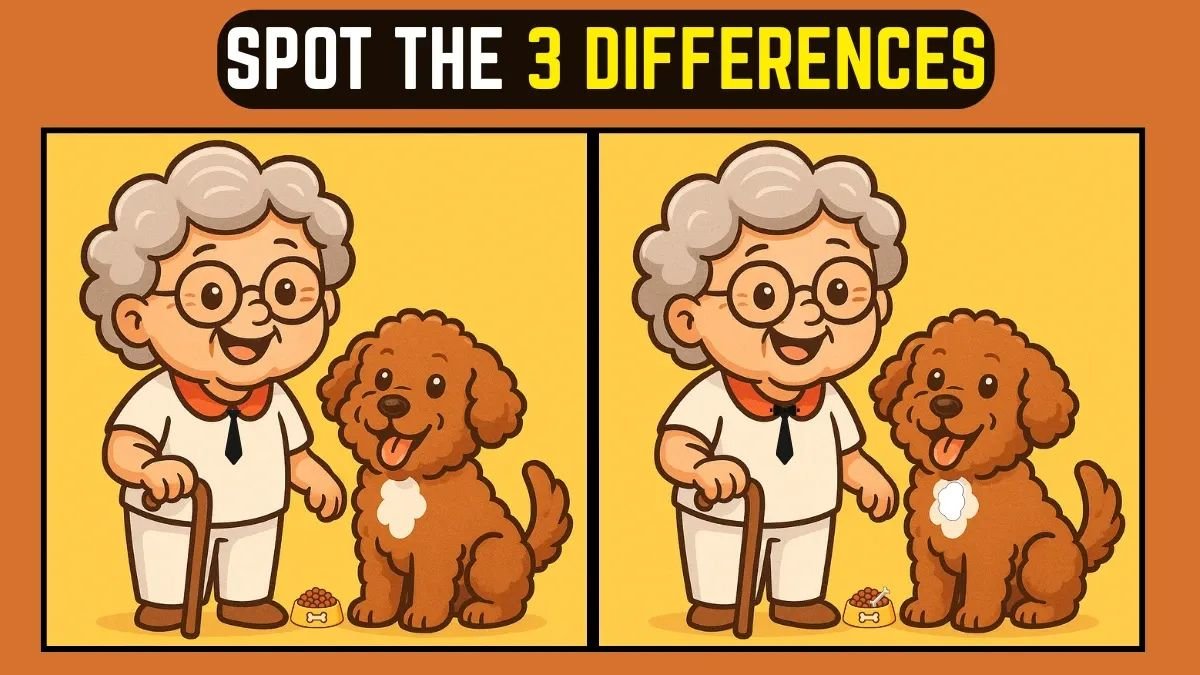
Are you ready for an exciting challenge that puts your observational skills to the test? The “Spot the Difference” puzzle is a thrilling way to engage your mind while having fun. Your task is to identify three differences between the two images of a grandma and her dog—all within just 8 seconds! This challenge demands not only attention to detail but also rapid visual processing under pressure.



The Popularity of “Spot the Difference” Puzzles
“Spot the Difference” puzzles have captivated audiences for years, frequently appearing in books, magazines, and online games. Their appeal lies in their ability to engage people of all ages, serving as both a quick mental exercise and a delightful pastime. While they may seem straightforward, these puzzles can be surprisingly challenging. The objective is to carefully analyze two nearly identical images and discover subtle discrepancies, which may involve alterations in color, minor background changes, or the appearance of new objects.
Beyond entertainment, these puzzles provide valuable cognitive benefits. Engaging in “Spot the Difference” challenges enhances various mental functions, including:



- Focus: Sharpening your ability to concentrate.
- Visual Memory: Strengthening your recall of images and details.
- Pattern Recognition: Enhancing your skill in identifying visual inconsistencies.
Why Is This Puzzle So Challenging?
The thrill of spotting differences quickly intensifies the difficulty. The images of the grandma and her dog may appear almost the same, yet subtle variances challenge your attention and focus on intricate details. When rushed to find differences, our eyes tend to gravitate toward larger, more noticeable objects, causing us to overlook the finer points.
Under an 8-second timer, maintaining focus is essential. You must train your brain to work swiftly while being precise. This not only tests your visual memory but also your cognitive speed and adaptability.
How to Tackle the Puzzle: Tips for Spotting the Differences
Improving your chances of spotting differences in this challenge comes down to honing attention to detail. Here are some invaluable tips:
- Focus on Smaller Details: Examine items such as the dog’s collar or the grandma’s clothing, as these often conceal changes.
- Scan Methodically: Instead of jumping around, inspect one section thoroughly at a time, moving row by row.
- Look for Color and Shape Changes: Pay close attention to small alterations in color or shape, particularly in clothing and poses.
- Stay Calm Under Pressure: Remember to breathe and take your time with each difference, avoiding rushed analysis.
- Practice Makes Perfect: Regular practice will enhance your ability to spot differences swiftly over time.
The Benefits of Playing “Spot the Difference” Puzzles
While undeniably fun, “Spot the Difference” puzzles offer numerous cognitive advantages. Engaging with these brain teasers can improve your concentration and attention span, which can benefit everyday tasks requiring sustained focus.
Moreover, these puzzles help sharpen your pattern recognition skills. By practicing regularly, you train your brain to swiftly identify subtle visual changes, a valuable asset in solving complex problems or spotting inconsistencies in data.
Additionally, these activities enhance your visual memory, enabling faster recall of visual details—an essential skill for driving, reading, and recognizing faces.
Spot the Differences in the Grandma and Dog Puzzle: What Are the Key Changes?
In this specific “Spot the Difference” challenge, three subtle changes exist between the two images:
- Grandma’s Collar: Notice a change in both shape and color in the second image, making this the first difference to seek.
- Dog Treat Bowl: A banana appears next to the treats in the second image, adding a cheerful touch that wasn’t in the first.
- Dog’s Chest Patch: The shape of this patch changes in the second image, providing a slight but significant difference.
Identifying these differences requires careful observation and a keen eye, making the exercise both challenging and rewarding.
Conclusion: How Fast Can You Spot the Differences?
In summary, “Spot the Difference” puzzles are an enjoyable way to test and enhance your visual skills and cognitive abilities. Whether racing against the clock or savoring the challenge, these puzzles are an excellent means to engage your brain, sharpen your focus, and improve attention to detail. The next time you come across a “Spot the Difference” puzzle, take a moment to breathe, concentrate on the details, and see how quickly you can uncover all the differences. It’s a fun and fulfilling way to exercise your mind!